



Quick Answer: Underwater drones are tethered because a tether is the most reliable way to maintain real-time control underwater. It helps carry control signals, live video, sensor data, and in some systems, power. While tethers introduce drag and require cable management, they remain the practical standard for many underwater tasks that depend on stable piloting and continuous feedback.
Most underwater drones are tethered for one simple reason: a tether is still the most dependable way to maintain control underwater.
Unlike aerial drones, underwater drones operate in an environment where normal wireless signals do not perform well. Operators often need steady real-time control, live video, sensor feedback, and a reliable way to recover the vehicle if conditions change. A tether makes that possible.
That is why tethered control remains the standard for many underwater drones used in inspection, observation, search, and professional field operations.
For readers comparing products, this is an important mindset shift: a tether is not just an accessory attached to the vehicle. In many cases, it is a core part of the control architecture.

What Is a Tether on an Underwater Drone?
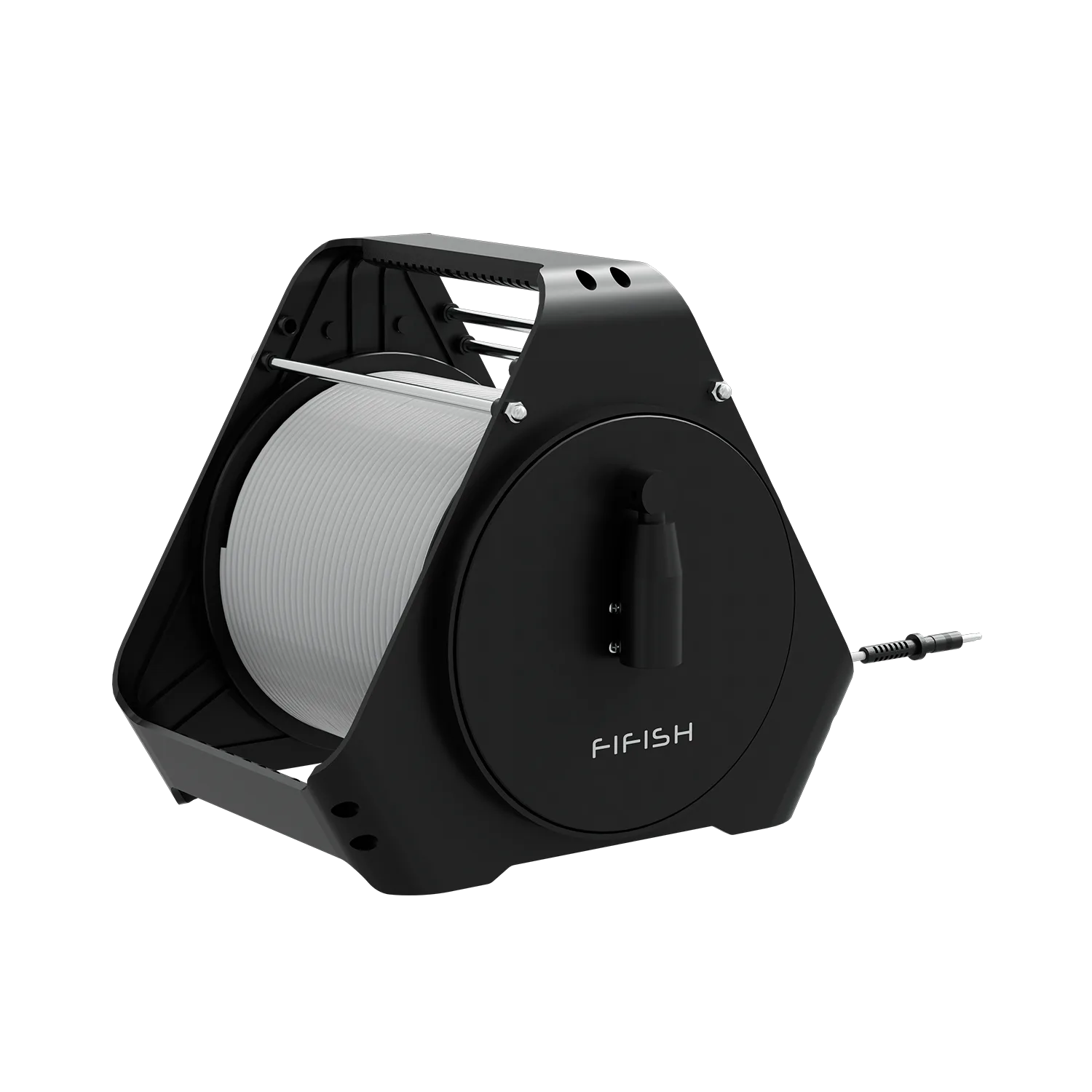
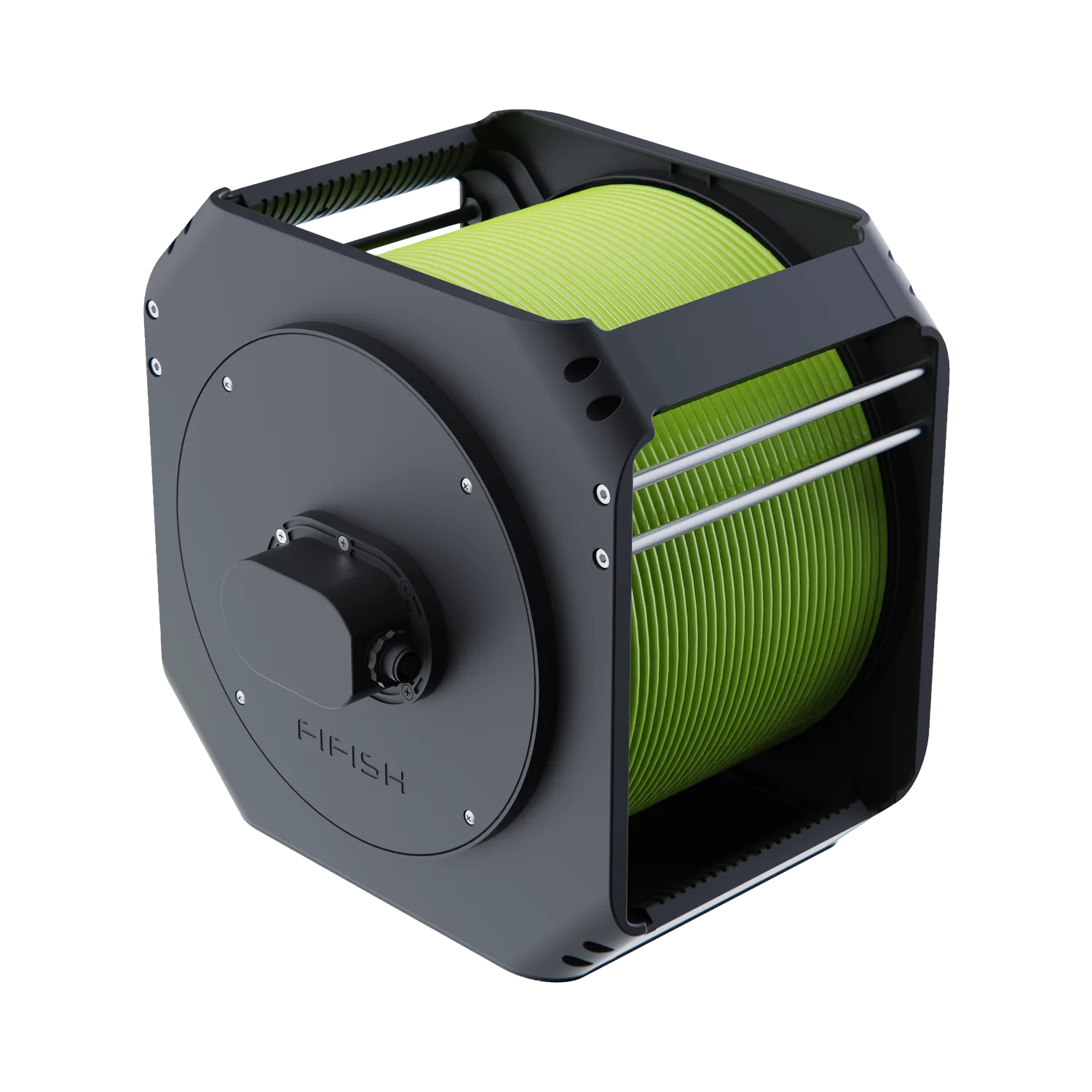
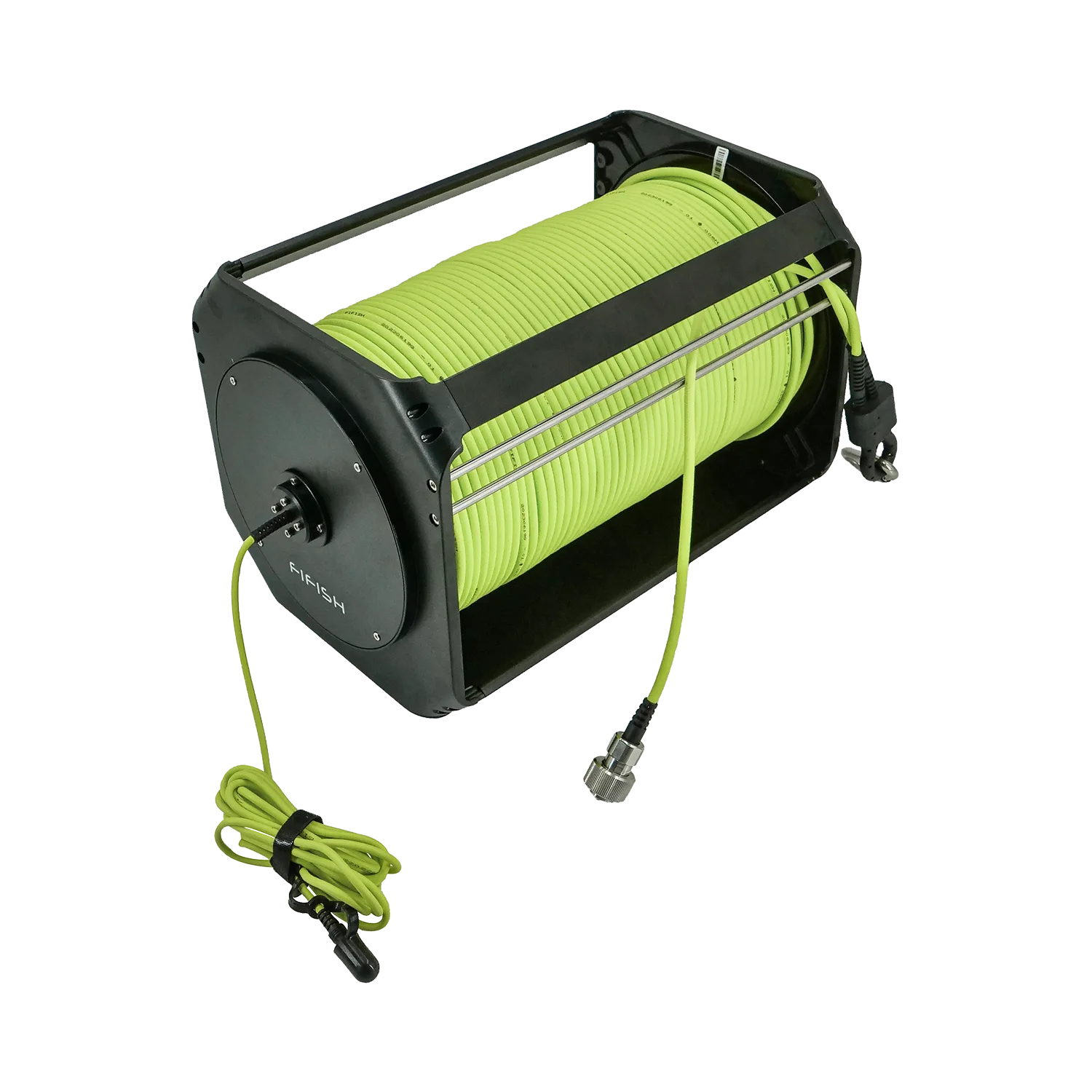
A tether is the cable that connects the underwater drone to the operator or surface control system.
Depending on the system, the tether may carry:
- control signals
- live video
- sensor data
- power from the surface
Some underwater drones use onboard batteries, so the tether mainly handles communication and control. Others rely on surface power as well, which supports longer missions and continuous operation.
Why Are Underwater Drones Tethered Instead of Wireless?
The short answer is reliability.
Water is a far more difficult environment for wireless communication than air. A signal that works well for an aerial drone does not behave the same way underwater. For many real-world tasks, especially those that require precise piloting and real-time feedback, a tether gives operators a far more stable connection.
In practical terms, that means a tether helps an underwater drone deliver:
- immediate control response
- stable live video
- dependable data transmission
- better supervision during the mission
So the question is not whether a wireless underwater drone is theoretically possible. The more important question is whether it can deliver the same level of control and operational confidence for the task at hand.
What Does the Tether Actually Do?
A tether is not just a cable that trails behind the vehicle. It is a core part of the control and operating system.
1. It maintains real-time control
For most underwater tasks, the operator needs instant steering input, reliable hovering control, and predictable vehicle response. A tether provides a consistent link between pilot and vehicle, which is especially important when working close to structures, in low visibility, or around confined underwater spaces.
2. It carries live video and sensor feedback
Underwater drones are often used because the operator needs to see what is happening in real time. A tether helps transmit live video and operational data back to the surface, such as depth, orientation, or payload feedback, so the user can make decisions immediately.
3. In some systems, it supplies power
Not every underwater drone uses a tether for power, but many professional inspection-class systems do. Surface power can support longer missions and reduce the limitations of battery-only operation. Even when the vehicle uses an onboard battery, the tether still remains important for communication and control.
4. It improves mission safety and recovery
A tether also helps the team supervise and recover the vehicle. If visibility drops, current increases, or the operator needs to end the mission quickly, the tether remains a physical link to the drone. That matters in inspection, recovery, and task-focused operations where the vehicle may be working near structures or in more demanding water conditions.
Key Reasons Underwater Drones Use Tethers
If you want the shortest practical explanation, most tethered underwater drones are designed this way for four reasons:
- Reliable real-time control for piloting near structures, targets, or confined spaces.
- Stable live video and sensor feedback during the mission.
- Power support in some systems for longer or more demanding operations.
- Better recovery confidence when the operator needs to supervise and retrieve the vehicle safely.
These four functions explain why tethered systems remain common across both recreational and professional underwater drone categories.
What Are the Advantages of a Tethered Underwater Drone?
Tethered underwater drones remain common because the design solves several real operating problems at once.
Reliable control
A tethered system gives the operator a more dependable connection during the mission, which is critical for precise underwater maneuvering.
Stable real-time feedback
Live video and sensor data are easier to deliver consistently when the vehicle has a direct link to the surface.
Better fit for task-based work
Many underwater jobs are not just about exploring. They involve checking structures, documenting conditions, observing details, or operating near a target area. Tethered control is well suited to these tasks because it prioritizes stability and supervision.
Easier recovery and oversight
The tether supports safer operations by keeping the vehicle connected to the team on the surface throughout the dive.
Are There Any Downsides to a Tether?
Yes. A tether is useful, but it also introduces tradeoffs.
Limited working range
The drone can only operate within the practical reach of its tether system.
More drag in current
The cable can create drag in moving water, which affects handling and requires good piloting as well as thoughtful tether management.
Snag risk
In cluttered environments, around structures, or near underwater obstacles, the tether must be managed carefully to reduce the chance of entanglement.
That is why tether design matters. Cable handling, buoyancy, abrasion resistance, and drag characteristics all affect how well the overall system performs in the field.
Why Not Just Make Underwater Drones Fully Wireless?
This is the question many first-time buyers ask, especially if they are comparing underwater drones to aerial drones.
The answer is that underwater missions often demand a different engineering priority.
Aerial drones are optimized around wireless mobility in open air. Underwater drones are often optimized around control reliability, live feedback, and mission supervision in a more difficult environment.
There are untethered underwater systems in the broader marine robotics world, but they are usually designed for different use cases, such as autonomy, pre-programmed surveying, or specialized communication methods. That is not the same thing as a small remotely operated underwater drone designed for close-range piloting and live task execution.
For many practical applications, a tether is still the more sensible solution.
What Does This Mean When Choosing an Underwater Drone?
If you are choosing an underwater drone for real-time observation, inspection, documentation, or recovery support, a tether should not be seen as a weakness.
In many cases, it is exactly what makes the system practical.
A better buying question is not simply, "Is it tethered?" A more useful question is:
- How well is the tether system designed?
- How stable is the control link?
- How does the system handle live video and data?
- Is the tether manageable in the environments I work in?
- Does the overall vehicle fit my mission needs?
That is the difference between judging the product by appearance and judging it by field performance.
For example, a compact tethered underwater drone may be enough for exploration, content creation, and light inspection, while a more advanced tethered system may be a better fit for structured inspections, stronger current conditions, or heavier professional workflows. The tether itself is only one part of the decision. Vehicle stability, camera system, maneuverability, payload compatibility, and mission type matter just as much.
Tethered Underwater Drones for Different Types of Users
Different users care about different things, even when they are all using tethered systems.
For beginners and recreational users
A tethered underwater drone can make piloting easier because the connection is more direct and the vehicle remains linked to the surface at all times. This is useful for exploration, content creation, and light observation tasks.
For inspection-focused users
Tethered control is especially valuable when the job requires precise positioning, stable viewing, and continuous operator awareness near a target structure.
For professional field teams
If the mission involves extended operating time, repeat observation, task-focused work, or integration with professional workflows, tethered systems are often the practical default because they support stable control and clearer supervision during operations.
How Tethered FIFISH ROVs Fit Different Tasks
At QYSEA, FIFISH ROVs are tethered because they are built around real-time piloting and live underwater feedback rather than untethered autonomous operation.
A more practical way to compare them is by mission type.
- For exploration, underwater filming, and light inspection, a compact tethered system such as FIFISH V-EVO may be enough.
- For utility-oriented work and more demanding day-to-day operations, FIFISH V6 EXPERT is a more suitable step up.
- For professional inspection efficiency and broader task workflows, especially when the work goes beyond observation alone, FIFISH E-GO is more relevant.
- For inspection-grade operations, stronger environmental demands, or more structured field work, it makes more sense to compare higher-level professional systems such as W6 NAVI or X1.
That distinction matters because the real question is rarely just why the vehicle has a tether. The more useful question is what kind of tethered system best matches the job.
Final Thoughts
Underwater drones are tethered because underwater work places a premium on reliability.
A tether helps maintain control, carry live video and data, support some power architectures, and improve recovery confidence. It also introduces tradeoffs, such as drag and snag risk, but for many underwater applications the benefits are worth it.
That is why tethered underwater drones continue to be the standard choice for many real-world missions.
If you are evaluating an underwater drone, do not treat the tether as an outdated feature. Treat it as part of the system design that makes underwater control possible.
FAQs About Tethered Underwater Drones
Are all underwater drones tethered?
No. Some underwater robotic systems are untethered or autonomous, but many remotely operated underwater drones are tethered because that setup supports more reliable control and live feedback.
Do underwater drone tethers always provide power?
No. Some tethers carry both power and communication. Others mainly carry control signals, live video, and data while the drone uses an onboard battery.
Why can’t underwater drones use Wi-Fi like aerial drones?
Because underwater conditions are much less suitable for the kind of wireless communication that works in air. For real-time piloting and feedback, tethered communication is generally more dependable.
Does a tether make an underwater drone harder to use?
It can add cable management to the operation, but it also improves control stability and vehicle supervision. In many situations, that tradeoff is worthwhile.
Are tethered underwater drones better for inspection?
For many inspection tasks, yes. Tethered systems are often better suited to real-time observation, precise maneuvering, and working near structures where control reliability matters.
Is a tether a disadvantage in current?
It can be. The tether creates drag, so current performance depends on the vehicle, the tether design, and how well the system is managed during the mission.
Explore Tethered Underwater Drones by Mission Type
If you are comparing tethered underwater drones, it helps to start with the mission first.
For lighter use cases such as exploration, filming, and light observation, a compact tethered ROV may be the right fit. For more structured inspection and professional field work, it usually makes more sense to compare systems built for stronger control stability, task-focused operation, and broader workflow support.
You can explore the FIFISH lineup on the QYSEA store to compare tethered underwater drones based on the kind of work you actually need to do.


Leave a comment
This site is protected by hCaptcha and the hCaptcha Privacy Policy and Terms of Service apply.