



Underwater Drone With Arm: Which Gripper Setup Do You Need?
An underwater drone with arm can grab, hold and move objects while you watch the live video, so the ROV does more than observe. This guide explains what the FIFISH 2-finger arm, its grippers and the retrieval hook each handle, using the specifications and prices on the QYSEA store as of October 12, 2026. Use it to pick a setup before you buy.
What an Underwater Drone With Arm Can Do
An underwater drone with arm can recover items, clear debris, move small obstacles and support utility work. QYSEA lists four kinds of jobs for its 2-finger arm.
-
Retrieval and salvage. Recovering lost items such as smartphones, keys, sunglasses or small anchors from the seafloor, and larger items with the retrieval hook.
-
Environmental cleanup. Removing plastic waste and discarded fishing nets from sensitive habitats.
- Object manipulation. Moving small obstacles, clearing silt from a target or positioning a sensor.
- Utility support. Guiding cables to lines or inspecting structural details that need physical contact.
The arm draws power from the ROV through the Q-Interface extension port, so there is no separate charging step. When the ROV is on, the arm is ready.

Arm and Gripper Setups at a Glance
A complete setup has three parts, and each handles a different weight and shape. The table below compares them using the specifications QYSEA lists on each product page, checked on October 12, 2026.
|
Part |
Best for |
Key specification |
US price |
|---|---|---|---|
|
2-finger robotic arm (grippers included) |
Small, fragile and flat items |
12 cm maximum opening, 100 N clamping force, 7 kgf grip on V-EVO and V6 EXPERT, 10 kgf on E-GO |
$399 (V-EVO), $699 (V6 EXPERT, E-GO) |
|
Replacing worn claw heads |
ABS plastic, 100 g, installed as a pair |
$35 |
|
|
Heavy items pulled on a rope, such as lobster traps, anchors and crates |
80 kgf maximum drag, anodized aluminum, used with the arm |
$49 |
How to Match the Setup to the Job
The right ROV gripper depends on the weight, shape and fragility of what you want to move. Start with the arm, then add the hook only when the load is too heavy for the claw.
Small, fragile or flat items
Use the arm with its parallel grippers. The jaws stay parallel as they close, so they press on a surface instead of a point. QYSEA says this spreads pressure and helps protect delicate objects such as pottery. The claw opens to 12 cm, so check the item's width first.
Heavy recovery with the hook
Use the retrieval hook with the arm. The ROV positions the hook on the target and locks it, then releases the claw and leaves the hook attached. You pull the load up by hand on a pre-attached rope. The hook is made for items such as lobster traps, anchors and submerged crates. QYSEA does not include the rope, so choose nylon or steel rope sized to your target's weight.
Debris and tangled lines
The claw tips have standard mounting holes, so you can add your own tool. QYSEA gives a fishing line cutter as an example for clearing nets or ropes.
Moving obstacles and placing sensors
The arm can push small obstacles aside, clear silt from a target and position a sensor. On the remote controller, switch to A-Mode, then rotate right to open the claw and left to close it. The 2-finger robotic arm user guide covers installation and controls.

What Limits an Arm-Equipped ROV
An arm adds capability and adds limits, so plan around them before a job.
-
Grip strength. The arm lists 7 kgf on V-EVO and V6 EXPERT and 10 kgf on E-GO, so heavy loads need the hook and a rope.
-
Hook dependence. The hook works only when mounted on the arm, and it needs a rope you supply.
-
Depth rating. The arm's depth rating is 100 m on V-EVO and V6 EXPERT and 200 m on E-GO.
-
Pairs only. Grippers install as a pair, and QYSEA does not recommend running a single gripper.
Which FIFISH ROV to Choose
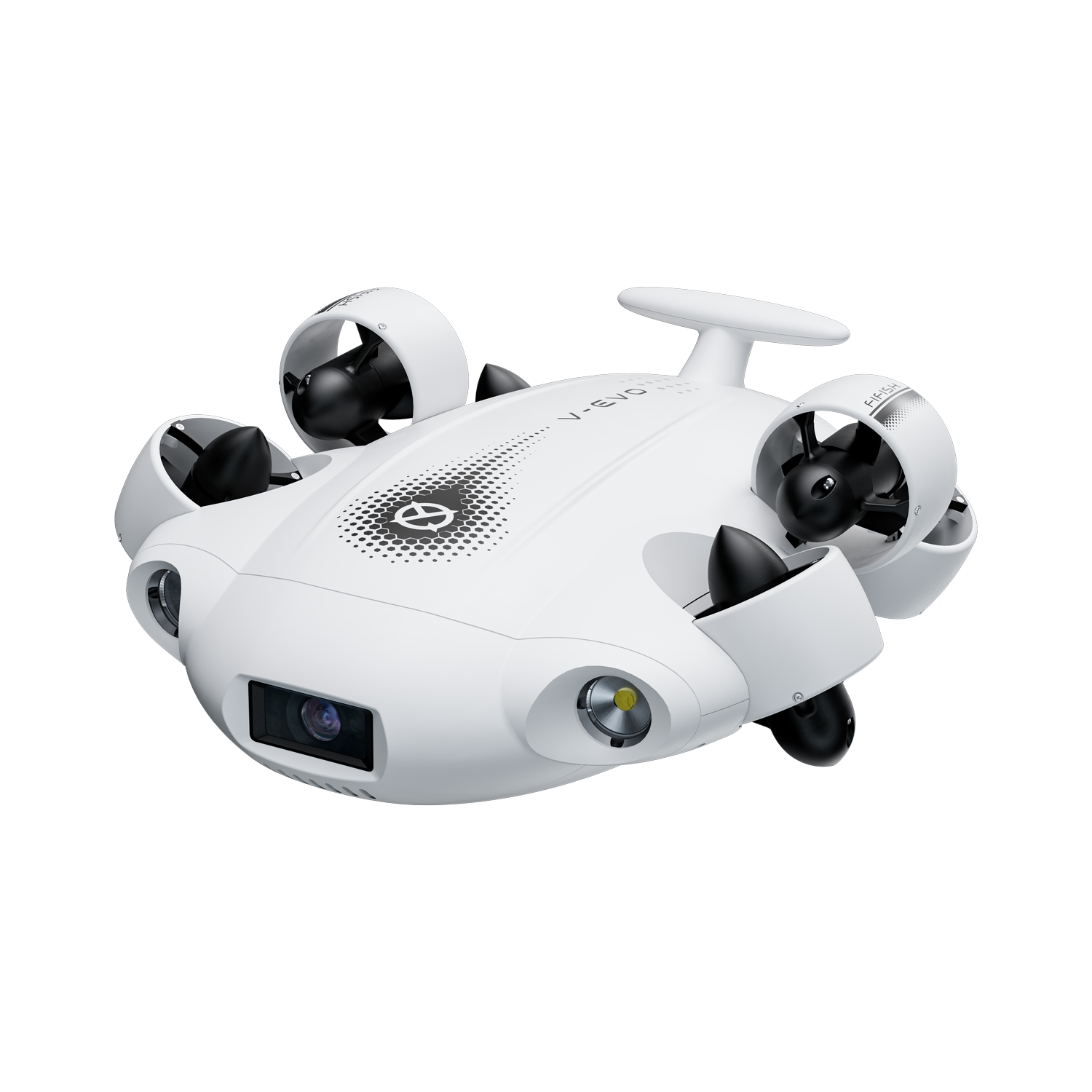
All three FIFISH ROVs take the same 2-finger arm, so the choice comes down to depth, grip strength and budget. The FIFISH V-EVO pairs with the $399 arm for small recoveries, and the FIFISH V6 EXPERT is the inspection-focused model that takes the $699 arm.
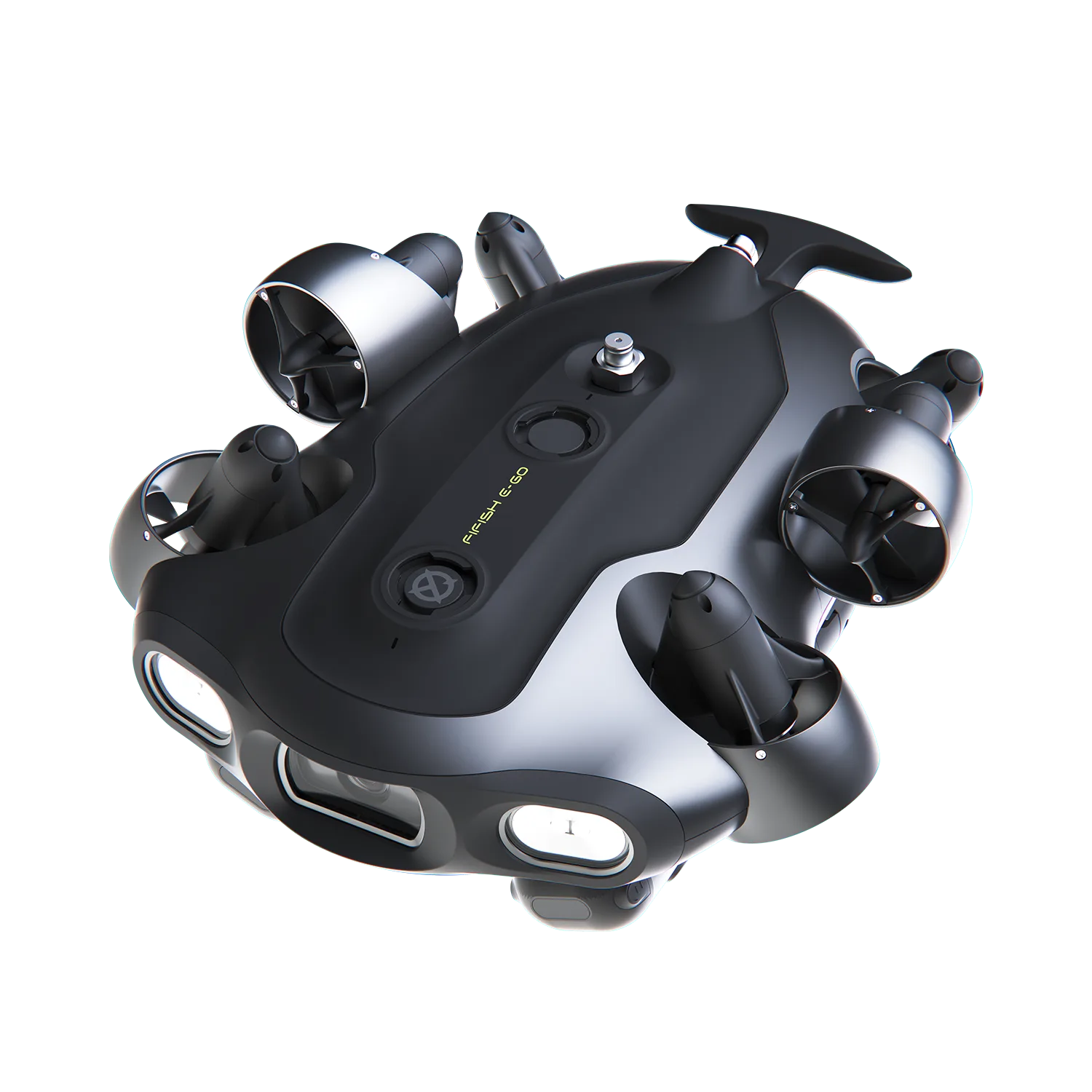
The FIFISH E-GO adds the 10 kgf grip and 200 m arm depth rating, and its Arm Pack at $7,348 includes the arm. To weigh all three side by side, compare the FIFISH models.
Frequently Asked Questions
Does the robotic arm need separate charging?
No. The ROV powers the arm through the Q-Interface, so the arm is ready whenever the ROV is on.
Does the arm come with grippers?
Yes. Each arm includes one pair of parallel grippers, and spare pairs cost $35.
Can I use only one gripper?
QYSEA does not recommend it. The arm uses a dual-axis linkage built for synchronized movement, so both grippers should go on as a pair.
Do I need the hook to pull heavy items?
Yes, for loads beyond the claw. The hook mounts on the arm and pulls up to 80 kgf, and you supply the rope.
Can I attach my own tool to the arm?
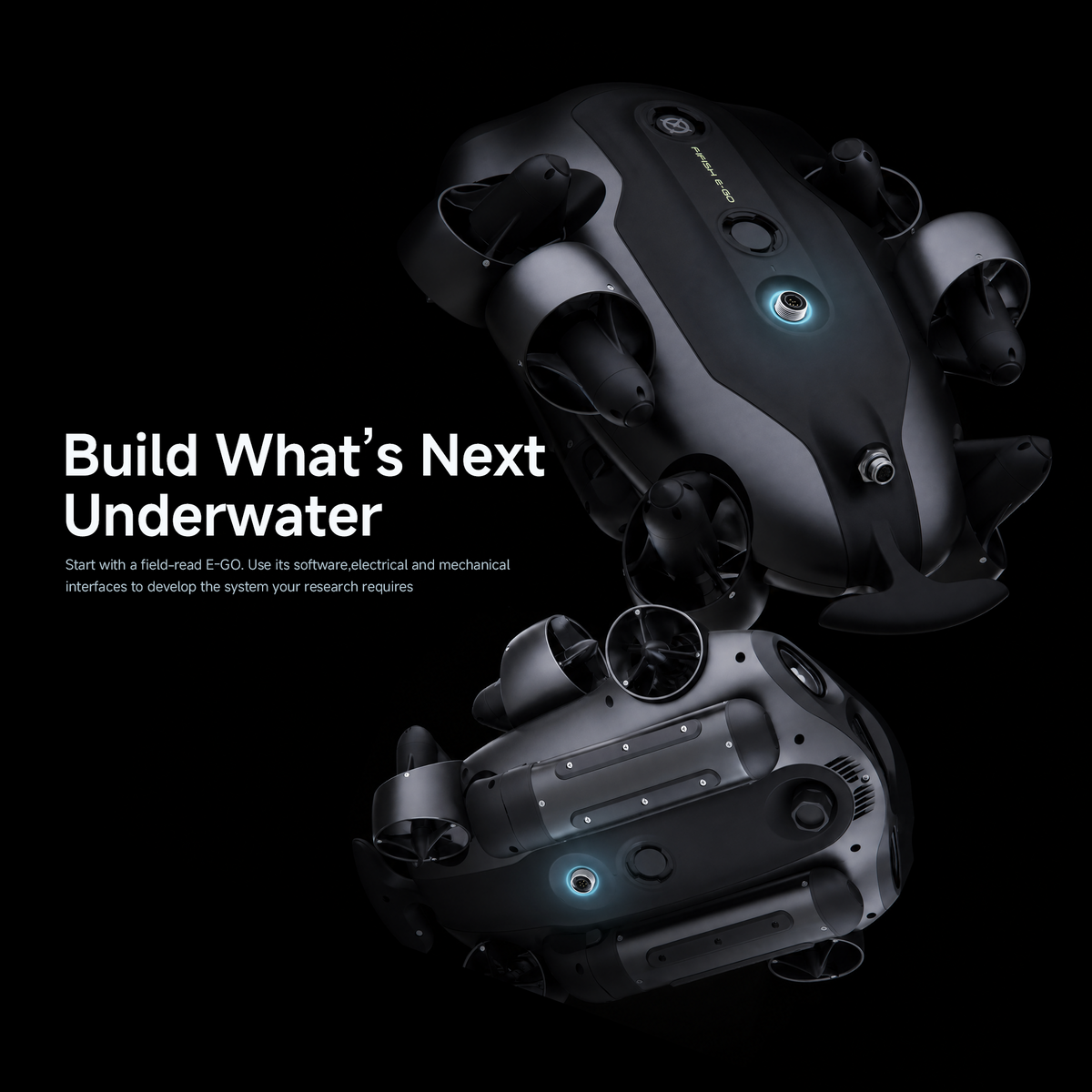
Yes. The claw tips have standard mounting holes for DIY tools, such as a line cutter. Any ROV gripper attachment should respect the arm's grip and depth limits. For custom hardware mounted to the ROV body, see the FIFISH E-GO Developer Kit.
Conclusion and Next Steps
An underwater drone with arm earns its place when you match the claw to the job. Start with the 2-finger robotic arm for your model, and add a pair of spare parallel grippers so a worn set never stops a job.
Add the retrieval hook if you recover heavy gear, and see how FIFISH fits underwater recovery and rescue work.
Not sure which ROV suits you? Let help me choose narrow it down.


Leave a comment
This site is protected by hCaptcha and the hCaptcha Privacy Policy and Terms of Service apply.