



FIFISH E-GO Developer ROV vs BlueROV2: A Developer-Friendly Alternative
Key takeaways
-
The FIFISH E-GO Developer ROV and the BlueROV2 both suit teams that want to customize an ROV, but they take different routes to get there.
-
The E-GO Developer ROV adds software and hardware development on top of a finished platform: an SDK for apps and integrations, and the Q-IF Accessory Cable for external hardware.
-
The BlueROV2 is an open-source kit you assemble and can modify freely, and its base already includes a 1080p low-light camera and 6,000-lumen lighting.
-
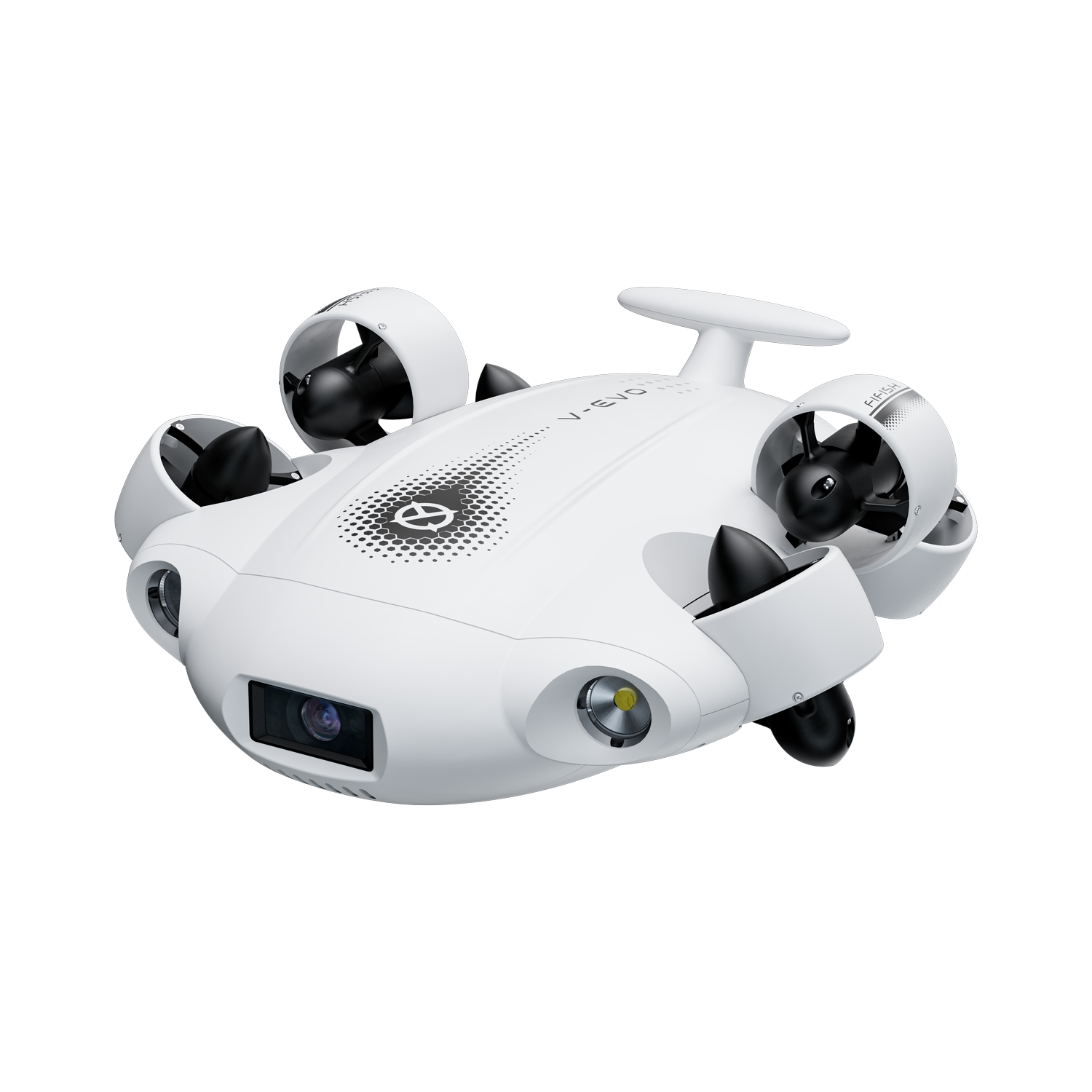
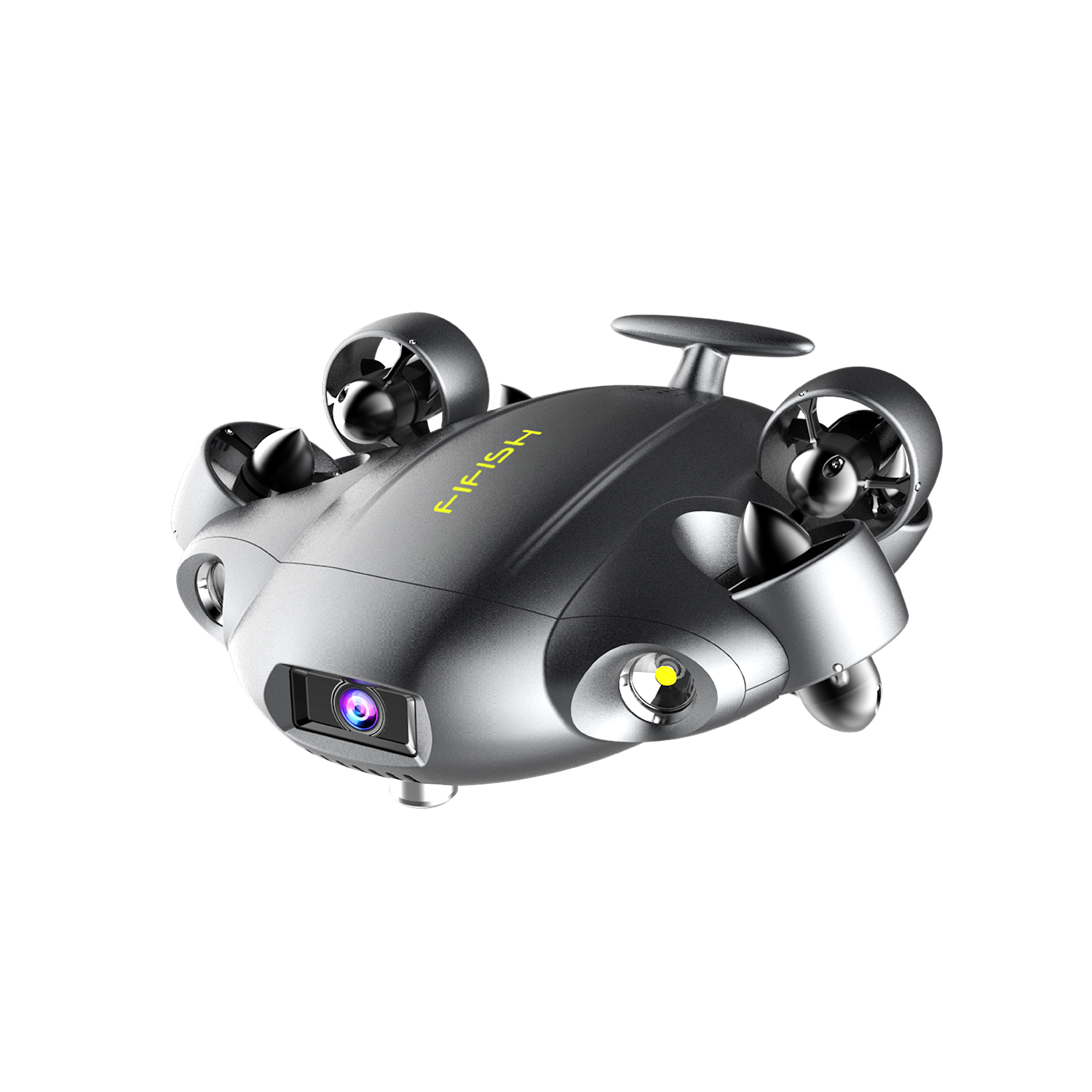
The E-GO Developer ROV arrives ready to dive with a 4K camera and 10,000-lumen lighting, so you build on a working vehicle rather than building the vehicle.
-
Configured like for like, a complete BlueROV2 setup came to about $8,531, while the E-GO Developer ROV Standard Pack includes everything for $6,714.
If you are comparing the BlueROV2 or looking for a BlueROV2 alternative you can develop on, the question is how you want to customize. The BlueROV2 from Blue Robotics is an open-source kit you assemble and are free to rebuild. The FIFISH E-GO Developer ROV is a finished ROV that opens up both software and hardware development. The difference comes down to whether you want to build the vehicle, or develop on one that already works.
FIFISH E-GO Developer ROV vs BlueROV2 at a Glance
Both are capable, tethered ROVs rated to 100 metres, and both can be customized. The difference is how: the BlueROV2 is open hardware you build and modify, while the E-GO Developer ROV is a finished platform you extend through an SDK and an accessory cable.
| FIFISH E-GO Developer ROV | BlueROV2 | |
|---|---|---|
| Out of the box | Finished, ready to dive | Kit, about 6 to 8 hours of assembly |
| Camera | 4K (12MP, 146°) | 1080p low-light (included) |
| Lighting | 10,000 lumens built in | 6,000 lumens (included) |
| Depth rating | 100 m | 100 m standard (300 m aluminium option) |
| Payload and tooling | 5 kg; catalogued payloads via ports | Open frame; community and third-party parts |
| Software development | SDK for apps and system integration | Open-source (ArduSub, BlueOS) |
| Hardware development | Q-IF Accessory Cable for external hardware | Open frame and penetrators |
| Price | $6,714 Standard Pack, all included | Base ~$4,900 (100 m); ~$8,531 with matching essentials |

Customize the E-GO Developer ROV: SDK and Q-IF Cable
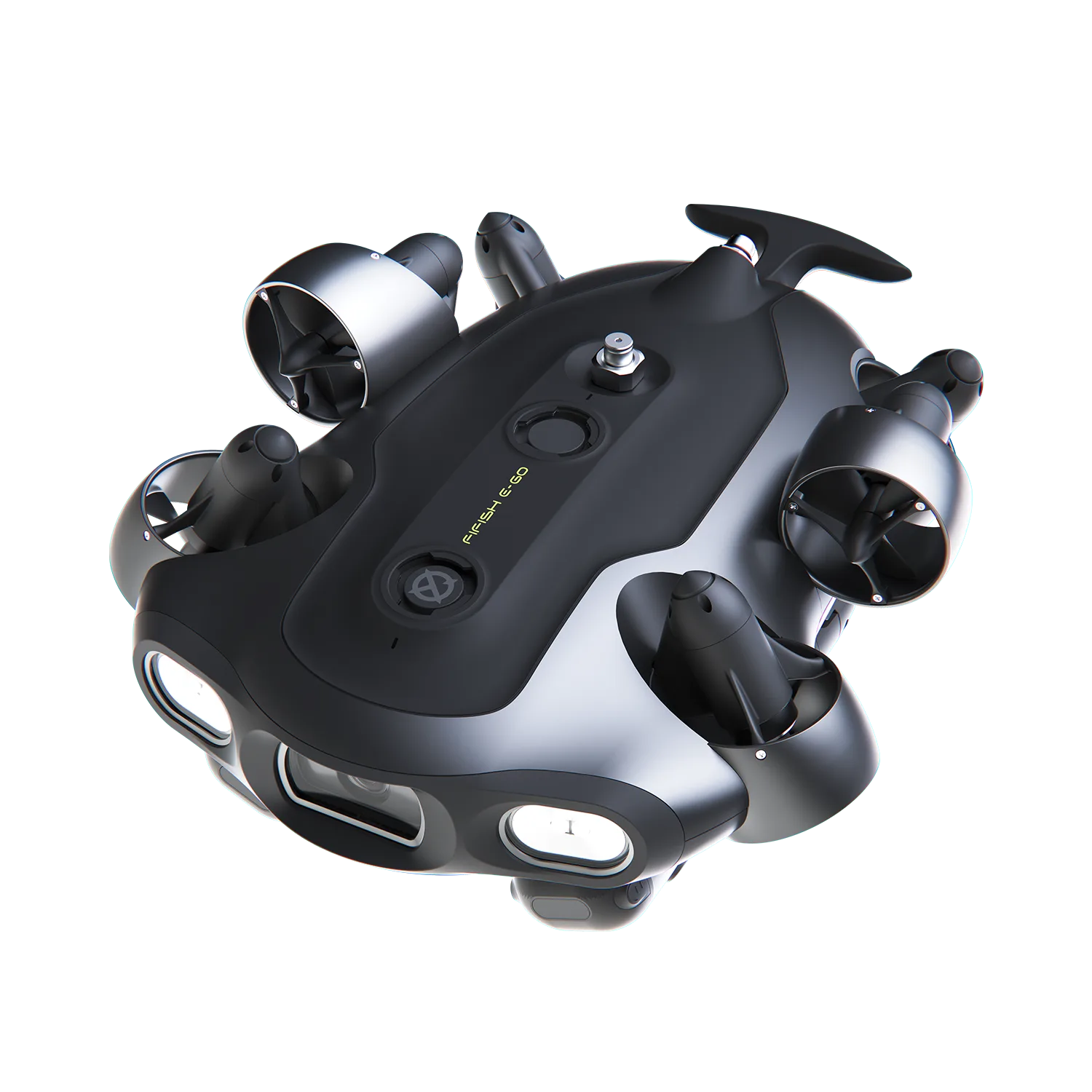
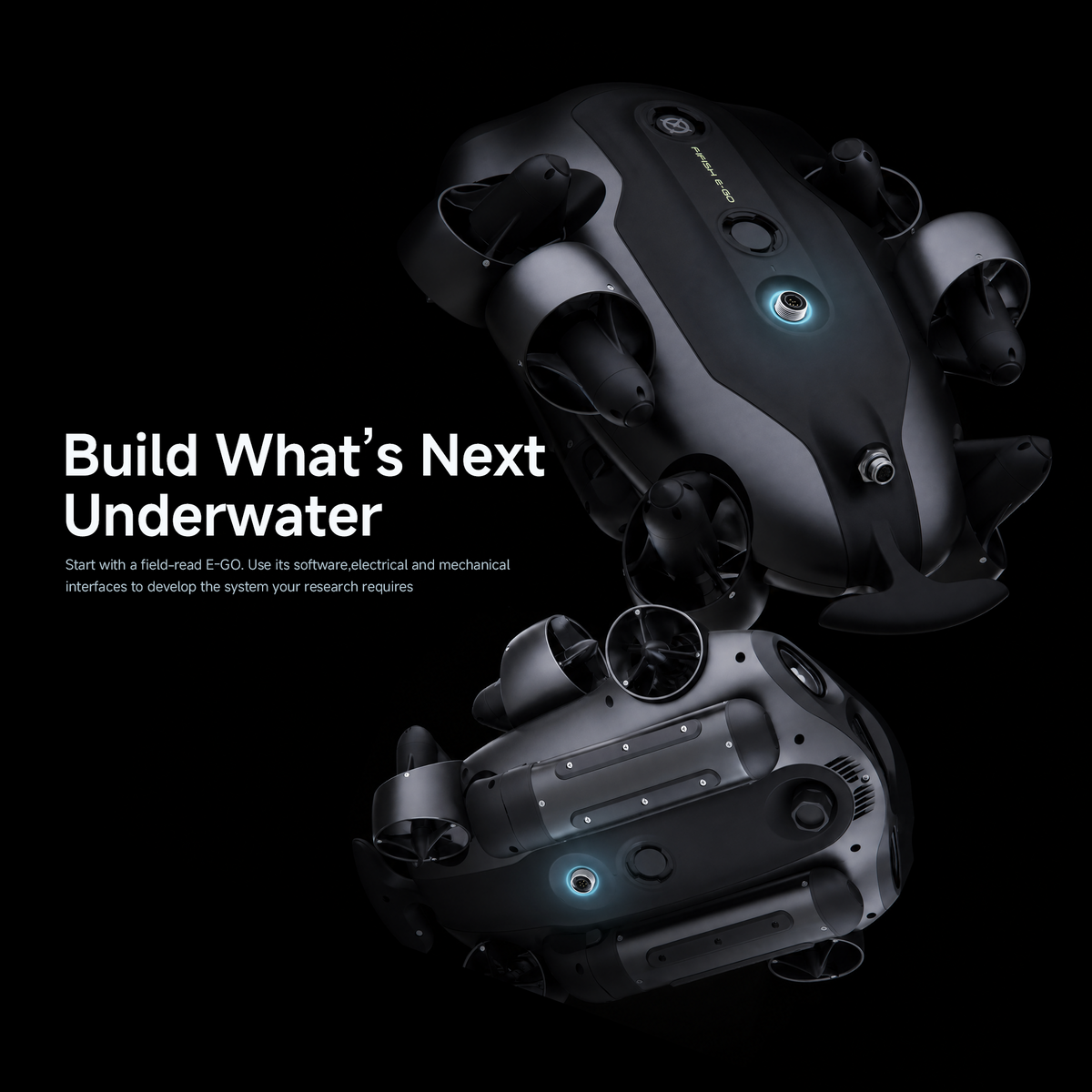
The E-GO Developer ROV is for teams that want to develop on an ROV rather than build one. It is the standard FIFISH E-GO platform with two things added: an SDK for software, and the Q-IF Accessory Cable for hardware.
Build Your Own Software With the SDK
The Developer ROV ships with an SDK and documentation, so your software team builds on the vehicle instead of around it. In practice that means writing your own control or mission logic and connecting the ROV to systems you already run, for example scripting a repeatable survey line so every pass is identical, or starting a dive from your own application. The SDK documentation lists exactly what it exposes.
Add External Hardware With the Q-IF Accessory Cable
The Q-IF Accessory Cable is the hardware side of the same idea. It gives you a connection point for external hardware, so you can run equipment the catalogue does not cover, for example a third-party sonar, a water-quality sensor or a custom instrument, off the ROV itself. With the vehicle's ports and modular mounting, you extend a finished, sealed platform rather than wiring one together from parts.

What You Get Out of the Box: 4K, 10,000 Lumens and Tooling
Everything you develop on sits on a vehicle that is already finished. The E-GO Developer ROV arrives ready to dive, with a 4K camera (12MP, 146°), 10,000 lumens of built-in lighting, a 5 kg payload and hot-swap batteries for full-shift sessions. Catalogued tools such as a 2-finger robotic arm and a laser scaler fit straight into its ports, and support comes from one supplier with a written warranty policy. Your time goes into your application, not into sealing a hull or sourcing a thruster.
If a tethered link is new to you, here is more on why underwater drones are tethered.
E-GO Developer ROV vs BlueROV2: What a Complete Setup Costs
On paper the BlueROV2 looks cheaper, because its headline price is for the base vehicle, which does include a 1080p low-light camera and 6,000-lumen lighting. The totals change once you build a setup that matches the E-GO Developer ROV, with a 4K camera, added lighting, the tether, spool and controller.
While the BlueROV2 has a lower starting price, building a more fully equipped system requires additional components, such as a 4K camera upgrade, lighting, a tether, spool, and controller. Depending on the configuration, the total cost can exceed $8,000. In comparison, the FIFISH E-GO Developer ROV Standard Pack is priced at $6,714, with a built-in 4K camera, lighting, tether, spool, controller, and industrial case included. If the standard BlueROV2 meets your needs, it may be the more affordable option. However, for teams looking for a more integrated, ready-to-deploy solution, the E-GO Developer ROV offers a compelling alternative.
Is the E-GO Developer ROV a Good BlueROV2 Alternative?
The BlueROV2 is a capable, fully open platform, and for teams that want to build and own every part it is a strong choice. For developers who want a customizable ROV without assembling and maintaining a kit, though, the E-GO Developer ROV is the stronger alternative. It gives you software customization through its SDK and hardware customization through the Q-IF Accessory Cable, on a platform that works out of the box. If full open hardware and component-level freedom are what you are after, the BlueROV2 is still the better fit. The E-GO Developer ROV suits teams who want to develop on a finished ROV; the BlueROV2 suits those who want to build the ROV itself.
Which Should You Choose: E-GO Developer ROV or BlueROV2?
Choose the BlueROV2 if open hardware, component-level modification and hands-on assembly are the goal, and your team has the time and skills to build and maintain the vehicle.
Choose the FIFISH E-GO Developer ROV if you want to develop and customize, in software through the SDK and in hardware through the Q-IF Accessory Cable, on a finished vehicle you can deploy right away. To see how it sits against the rest of the range, compare the FIFISH models.
Getting Started With the E-GO Developer ROV
The BlueROV2 and the FIFISH E-GO Developer ROV both suit teams that want to customize, from different starting points. If you want to build and own every part, the BlueROV2 is made for you. If you want to develop on a finished, ready-to-dive vehicle, in software and in hardware, the E-GO Developer ROV is the better fit. Start with the SDK documentation to see what is possible, explore the FIFISH E-GO accessories range, or contact our specialists to talk through your use case.
Frequently Asked Questions
Is the FIFISH E-GO Developer ROV customizable?
Yes, in two ways. Its SDK lets you develop and customize software and system integrations, and the Q-IF Accessory Cable lets you connect external hardware. You customize a finished vehicle rather than assembling one.
What is the difference between the E-GO Developer ROV and the standard E-GO?
The Developer ROV builds on the standard E-GO platform and adds developer access: SDK documentation for software development and the Q-IF Accessory Cable for hardware integration. The core vehicle, camera, lighting and tooling are the same.
How much does the FIFISH E-GO Developer ROV cost compared with the BlueROV2?
The E-GO Developer ROV Standard Pack is $6,714 with the camera, lighting, tether, spool, controller and case included. A BlueROV2 configured with matching essentials came to about $8,531. Prices change, so compare complete setups rather than base prices, and check both sites for current figures.
Can you integrate your own software and hardware with the E-GO Developer ROV?
Yes. The SDK supports software development and system integration, and the Q-IF Accessory Cable supports connecting external hardware and accessories.


Leave a comment
This site is protected by hCaptcha and the hCaptcha Privacy Policy and Terms of Service apply.