



How to Choose an Ice Fishing Underwater Camera for the 2026-27 Season
Key takeaways
-
An underwater camera shows you what your flasher marks really are, and how fish react to your bait.
-
Drop cameras cost less and are simple, but they only see the water below one hole.
-
An underwater drone swims out from the hole on its tether, scouts structure and can grab a snagged lure, at a higher price.
-
On the ice, cold rating, cable length, lighting and battery life matter more than screen size.
-
FIFISH ROVs are rated down to 14°F (-10°C) and are not built for breaking ice, so plan the hole and the weather first.
An ice fishing underwater camera lets you see what is under your hole, from whether fish are there to how they react to your bait and what the bottom looks like. You can choose a drop camera that hangs below the hole or an underwater drone that swims out on a tether. This guide explains how the two compare, which specs matter in the cold, and how to use either one, using the prices and specifications on the QYSEA store as of November 5, 2026
What Is an Ice Fishing Underwater Camera?
This kind of camera is a waterproof camera you lower through the ice to watch fish and the bottom live on a screen. Most anglers run one next to a flasher or fish finder. The flasher shows depth and marks, and the camera shows what those marks are and how they move. Two kinds of camera do the job.
-
Drop cameras. A camera on a cable that you lower straight down the hole and watch on a small monitor. Many add infrared night vision, and some mount on a panner that turns the view.
-
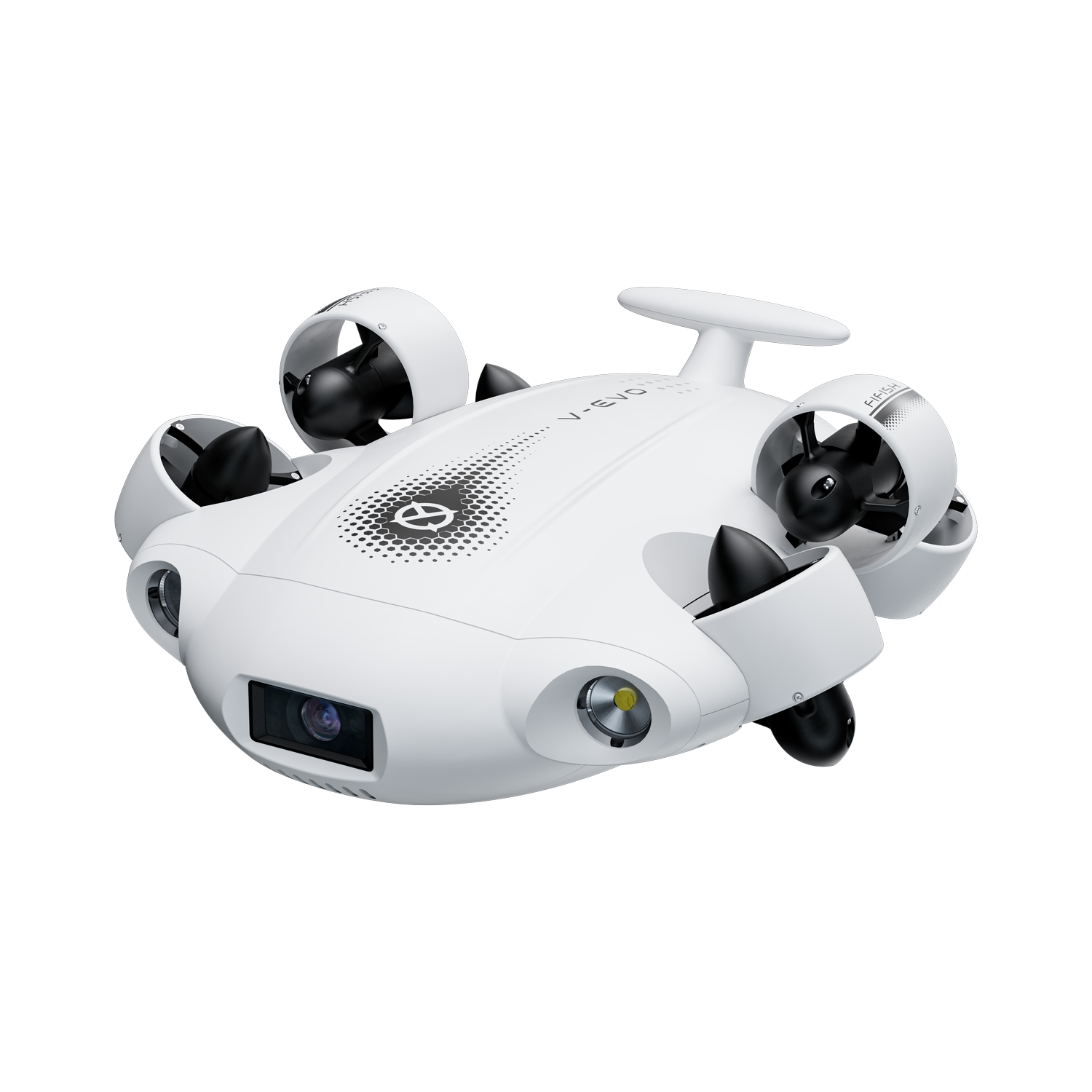
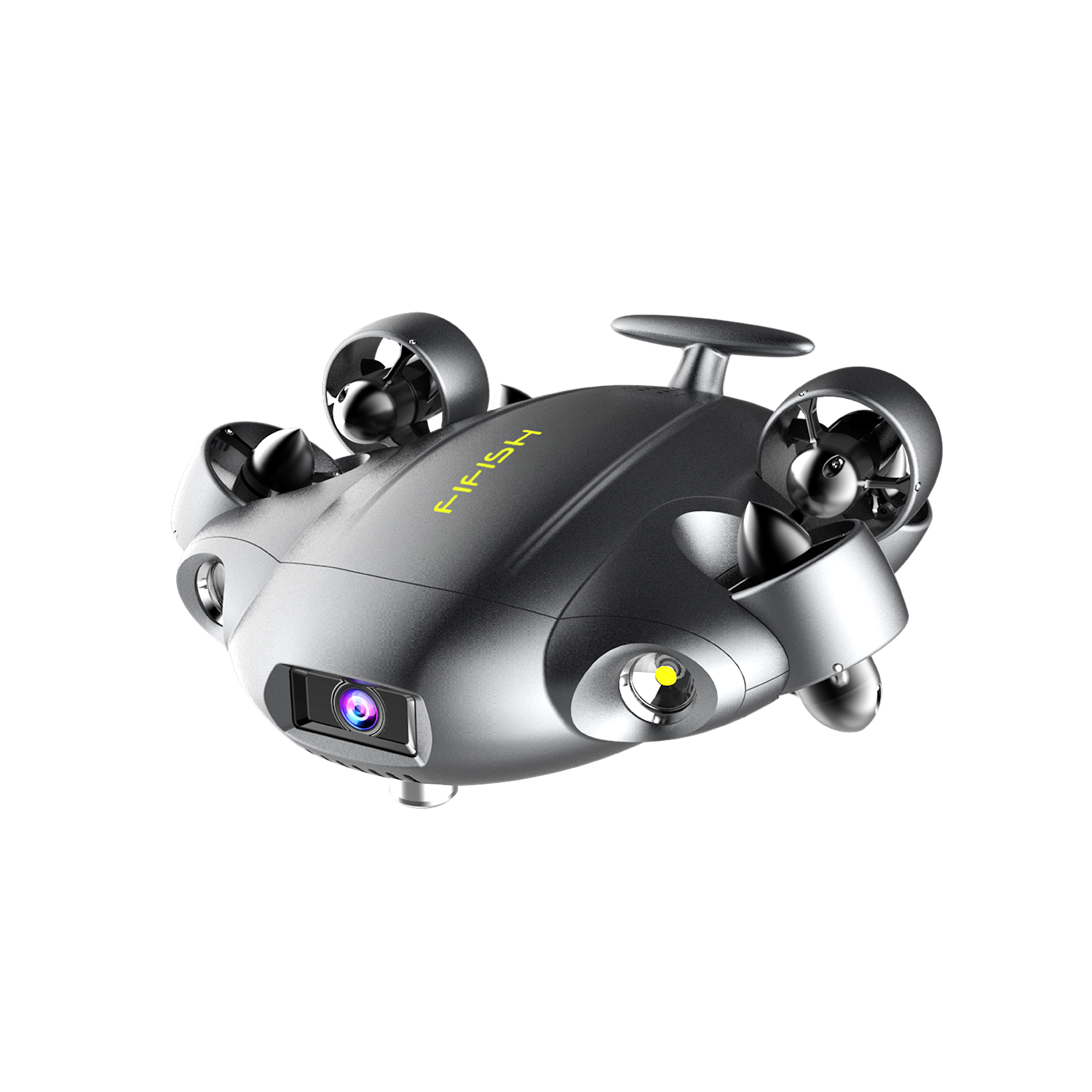
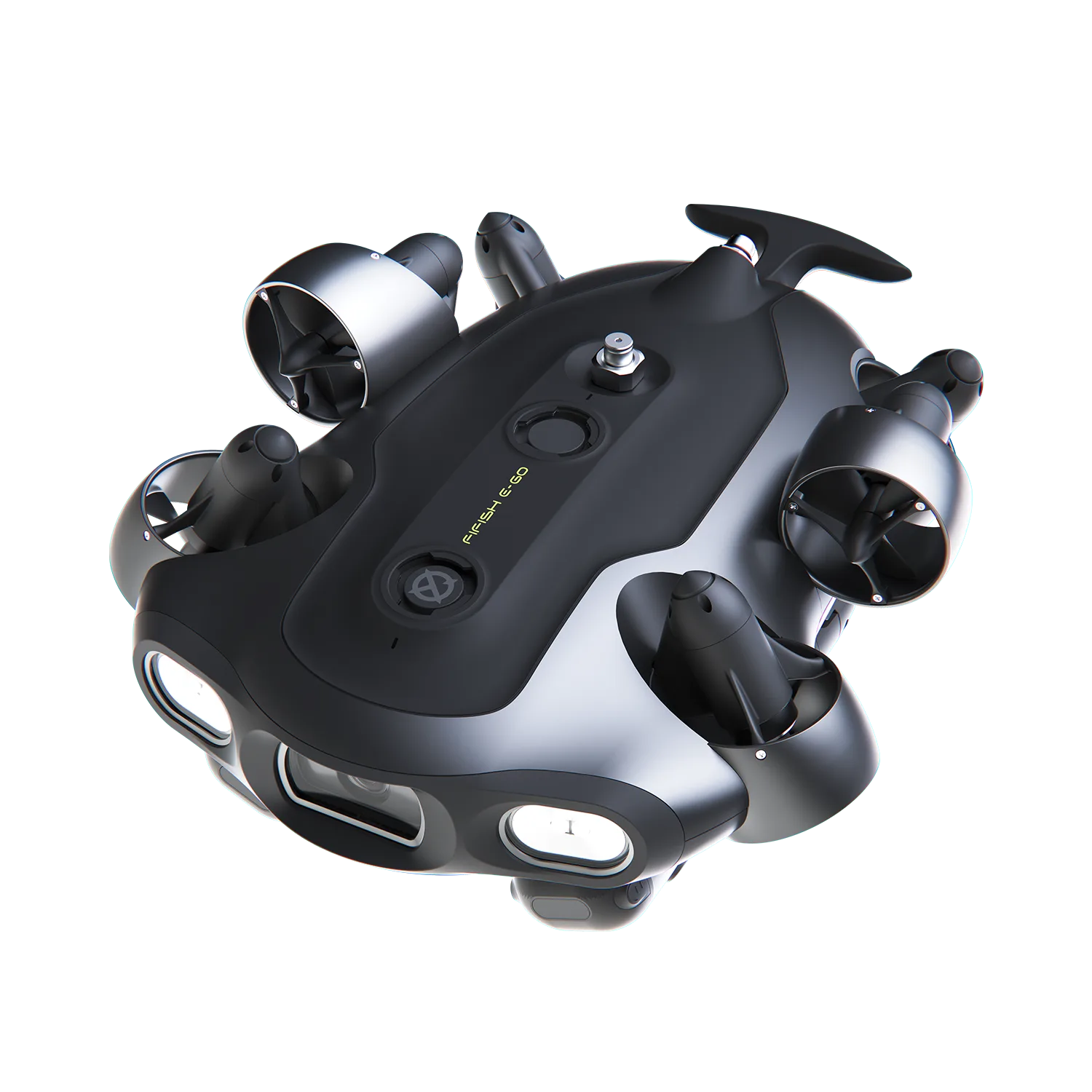
Underwater drones. A small tethered vehicle, also called an ROV (remotely operated vehicle), with its own camera and lights. You steer it under the ice from a remote and phone at the hole.

Drop Camera vs Underwater Drone on the Ice
The biggest difference is reach. A drop camera sees the water below one hole, while an underwater drone can travel out from the hole, look around structure and come back. The table compares the two on what matters through the ice. Drop camera figures come from US Google Shopping listings for "ice fishing underwater camera", and FIFISH figures from the QYSEA store, both checked November 5, 2026.
|
Drop camera |
Underwater drone (FIFISH V-EVO) |
|
|
Price |
About $47 to $575 in the listings checked |
$1,269 Black Friday price ($1,399 regular) |
|
Movement |
Hangs below the hole, a panner turns the view |
Swims in any direction, 360° yaw, pitch and roll |
|
Reach from the hole |
The water column below the hole |
Up to 100 m (328 ft) of tether |
|
Camera |
Mostly 720p, 1080p or analog TVL ratings |
4K video up to 60 fps, 12MP stills |
|
Lighting |
Infrared or small LEDs |
5,000 lumens of LED lighting |
|
Lure retrieval |
No |
Yes, with the optional robotic arm |
|
Hole needed |
A standard fishing hole |
An opening that clears a 13.0 x 5.6 in body |
If you want the full picture of how a drone works as an underwater fishing camera through the seasons, QYSEA's fishing page covers boat and kayak use too.
What to Look for in an Ice Fishing Underwater Camera
The specs that matter most on the ice are cold rating, cable length, image quality in low light and battery life. A sharp screen helps, but not if the camera dies by mid-morning. Check these five points before you buy, whichever type you choose.
Cold-weather rating
Look for a stated operating temperature, not just "waterproof". FIFISH ROVs list -10°C to 60°C (14°F to 140°F) on their spec sheets. On colder days, keep your gear in a heated shelter or vehicle until you launch.
Cable or tether length
Match the cable to the deepest water you fish. A drop camera needs only a little more cable than the depth. A drone needs extra length to travel sideways, and the V-EVO ships with a 100 m (328 ft) tether.
Image quality and lighting
Water under ice and snow is dark, so lighting matters as much as resolution. Infrared helps drop cameras see at short range in black and white. LED lighting shows color and detail, and the V-EVO carries 5,000 lumens across two lights.
Viewing angle and panners
A fixed drop camera shows one direction. An ice fishing camera panner is a mount that rotates the camera from the surface, so you can sweep around the hole without pulling it up. A drone turns itself, so it does not need one.
Battery life in the cold
Plan for less runtime on the ice than you get on a mild day. The V-EVO lists 1 to 4 hours per charge depending on conditions, with a sealed battery and a 1-hour fast charge. Bring a way to recharge in the shelter if you fish all day.

How to Use an Underwater Camera for Ice Fishing
Ice fishing with an underwater camera works best as part of your setup, next to your flasher rather than in place of it. Lower the camera, find the bottom, then fish while you watch. These steps work for both types.
-
Check the ice first. Follow your local ice-safety guidance on thickness before you drill or cut.
-
Make the right hole. A drop camera fits your fishing hole. A drone needs an opening that clears its body and tether.
-
Keep gear warm until launch. Store the camera, screen and batteries in the shelter or vehicle.
-
Find the bottom, then set the view. Lower to the bottom, then position the camera so your bait sits in frame.
-
Watch how fish react. If fish look and leave, change your jigging speed, bait or color.
-
Record what works. Save clips of active fish and good spots so you can come back to them.
Where an Underwater Drone Fits on the Ice
An underwater drone earns its place when you want to see beyond the hole or get gear back. It costs more than a drop camera, so it suits anglers who also use it from a boat or kayak the rest of the year. The FIFISH V-EVO is the model QYSEA recommends for anglers.
Scout structure away from the hole
On its 100 m tether, the V-EVO can check weed edges, drop-offs and rock piles around your spot before you drill more holes.
Recover snagged lures and gear
With the 2-finger robotic arm ($399 for the V-EVO, or $1,559 as the V-EVO Arm Pack), the drone can grip a snagged lure or a dropped tool. The arm lists a 7 kgf (15.4 lbf) maximum grip on the V-EVO. See which gripper setup to use for heavier jobs.
Film what happens under the ice
The V-EVO records 4K video at up to 60 fps with electronic stabilization (EIS), and AI Vision Lock keeps a subject in frame. You keep footage, not just a live view.

Limitations of Using an Underwater Drone Under Ice
An underwater drone is not built for every ice day, so plan around these limits before you buy one for winter.
-
Cold limit. The rated minimum is 14°F (-10°C). QYSEA says its ROVs work in cold open water but are not designed for ice-breaking or fully frozen environments.
-
Hole size. The V-EVO measures 15.1 x 13.0 x 5.6 in (38.3 x 33.1 x 14.3 cm). Check that your opening clears it with room for the tether.
-
The tether is your way back. Under ice, the tether is the only route back to the hole, so keep it clear of snags. Read why underwater drones are tethered.
-
Runtime. Expect 1 to 4 hours per charge. The V-EVO battery is sealed, so you recharge rather than swap.
-
No sonar on the V-EVO. It does not support sonar attachments, so keep your flasher running.
-
Price. At $1,269 (Black Friday price) it costs several times more than most drop cameras. QYSEA's warranty policy gives up to one year of cover, varying by component.
Which Ice Fishing Underwater Camera to Choose
Choose by what you want to do under the ice, not by screen size.
Choose a drop camera if you fish one hole at a time, mainly want to watch fish react to bait, and want the lowest cost.
Choose the FIFISH V-EVO if you want to scout away from the hole, retrieve snagged lures, film in 4K, and use the same drone on open water all year. For brighter lighting or a bigger payload, compare the FIFISH models, or read how to choose an underwater drone.
Frequently Asked Questions
Are underwater cameras worth it for ice fishing?
Yes, if you want to know what your flasher marks are and how fish respond to your bait. Most anglers start ice fishing with an underwater camera for exactly that. A drop camera is the lower-cost start. A drone adds reach and lure retrieval.
Can you use an underwater drone for ice fishing?
Yes, through an opening large enough for the drone and in conditions within its 14°F (-10°C) rating. FIFISH ROVs are not designed for ice-breaking or fully frozen environments.
How big a hole does an underwater drone need?
Bigger than a typical fishing hole. The V-EVO is 13.0 in wide and 5.6 in tall, so the opening must clear that plus the tether.
Does an underwater camera replace a flasher?
No. Run both. The flasher shows depth and marks across the cone, and the camera confirms what those marks are.
Can an underwater drone get a snagged lure back?
Yes, with the optional 2-finger robotic arm. On the V-EVO it grips up to 7 kgf (15.4 lbf).
What is an ice fishing camera panner?
An ice fishing camera panner is a mount that rotates a drop camera from the surface, so you can look around the hole without lifting the camera.
Conclusion and Next Steps
The right ice fishing underwater camera depends on how far you want to see. A drop camera covers the water below your hole. The FIFISH V-EVO adds reach, 4K footage and lure retrieval, and works on open water the rest of the year.
See how the V-EVO works as an underwater fishing camera, or let help me choose match a model to how you fish. All FIFISH ROV packages ship free to the US and Canada.


Leave a comment
This site is protected by hCaptcha and the hCaptcha Privacy Policy and Terms of Service apply.